In Which The Ad Break Eats The Show
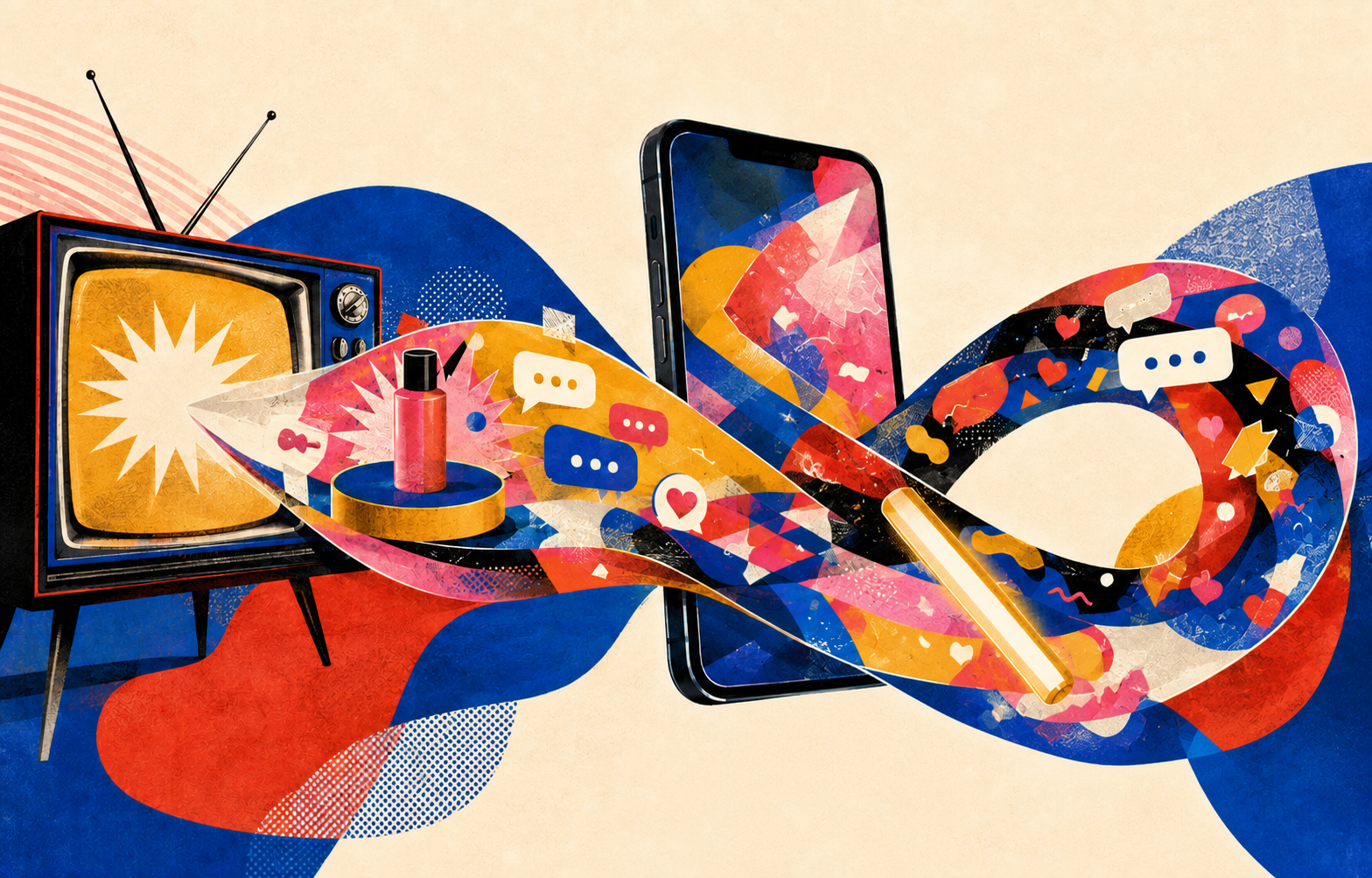
What happened to the commercial break?
The old setup was annoying, but at least it was obvious. The show stopped. Somebody tried to sell you something. Then the show came back. You could pay attention or get up and grab a snack. Either way, you knew it was an ad.
That line is harder to see on social platforms. A celebrity interview can sit right next to a dance, a fan reaction, or a sponsored post. They all look more or less the same on your screen, and they are all competing for the same few seconds of your attention. Then some other netizen watching picks up the baton. Maybe they review it. Maybe they make fun of it, recreate it, or turn around and sell it themselves.
What’s wild is that all of this can travel the globe and become a viral phenomenon in less than 24 hours.
After a while, it starts to feel as if the ad is eating the “show” or whatever it was we went online to entertain ourselves with. Or maybe the show swallowed the ad? At this point, it’s hard to tell which one is doing the chewing.
Please Enjoy This Interruption
Commercials on streaming services and FAST TV can feel especially grating and dated. When the show stops I am served the same low quality commercial I saw five minutes ago, sometimes back to back in a row for another 5 minutes. Not only is it annoying, but it drives people away from wanting to watch the main show. So they look down at their phone to do something more interesting. Because -
On the flip side, our phones have trained us to abandon anything that doesn’t interest us immediately. When the next swipe has to be something funnier, stranger or more satisfying than the previous one, a regular sales pitch feels out of place. And yup, it’s getting skipped.
So the “break” is unnecessary. Advertising has transformed into swipes that need to be sticky; it can no longer depend on a show to hold us hostage. It has to compete.
The Influencer Middleman
Influencer marketing has been the current solution. Instead of interrupting something we chose to watch, a brand could enter through someone we had already chosen to follow. The recommendation arrived inside an existing relationship.
But that transaction has become increasingly easy to see.
This is especially true with enormous influencer accounts. One sponsored recommendation follows another, and what was supposed to feel personal begins to look like rented distribution.
The influencer may have reach, but does the endorsement create an actual relationship between the audience and the product? Does it make anyone remember the brand? Do you trust their opinion? Does it make anyone want to buy anything? Does it deliver a return beyond a very large number under the word “views”?
Influencer marketing can absolutely work. But reach and influence are not the same thing. Seeing a product is not the same as caring about it, and caring about it is not the same as buying it.
The larger and more commercial the account becomes, the harder it may be to maintain the intimacy that made the person influential in the first place.
The Product Placement Uno Reverse
This is why Gap’s recent advertising interests me.
For its 2025 “Better in Denim” campaign, Gap turned a denim ad into a full-on pop spectacle. KATSEYE and a crew of dancers performed choreography set to Kelis’s “Milkshake,” creating the kind of high-energy video built for replay.
But that was just the jumping off point of the campaign. Once the content landed on Instagram, TikTok and YouTube, it became available for reactions, recreations, dance tutorials, fashion commentary, arguments and endless clips. The audience took the baton, and suddenly the campaign had no finish line.
Gap later reported more than 400 million views and eight billion impressions. Those numbers demonstrate attention, although they don’t tell us exactly how many jeans were sold. That is part of what makes modern advertising ROI so slippery: we can measure circulation down to the click while still struggling to measure when an ad has become a cultural moment.
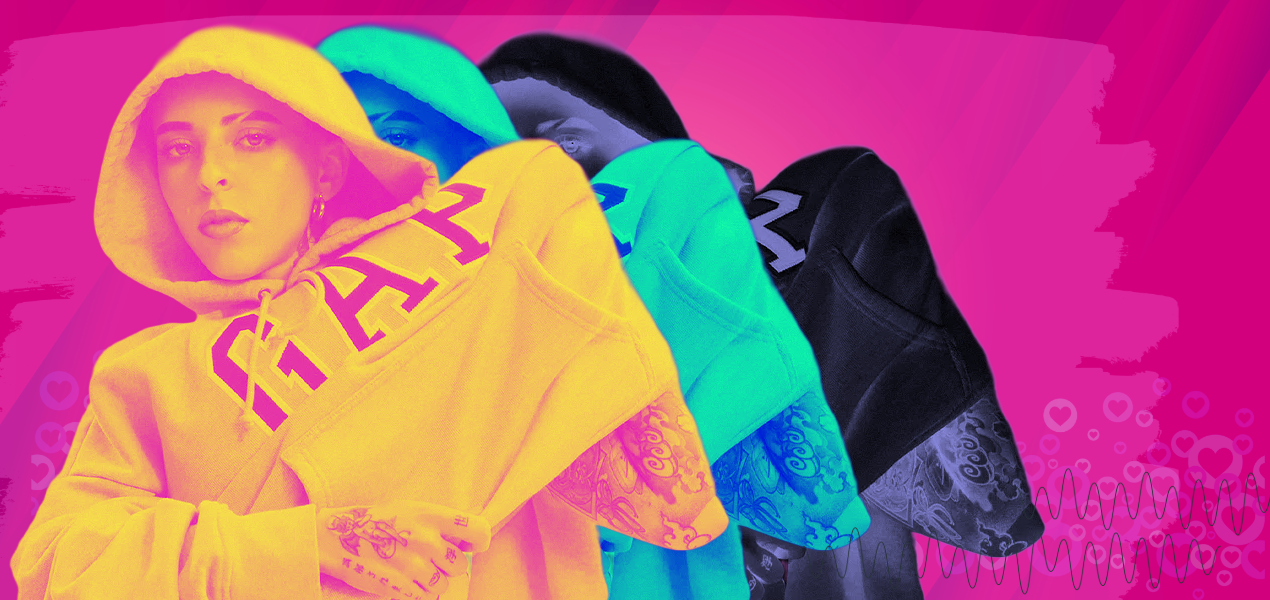
Gap followed KATSEYE with Young Miko, turning “WASSUP” into a complete music video with new choreography and 26 dancers.
Gap’s campaign kept expanding as people turned it into posts of their own. The song could be reused. The dance could be learned. The outfits could be discussed. The video could be clipped, shared, celebrated, criticized and pulled into conversations Gap did not create or control.
That participation is now a fundamental part of the campaign.
Traditional product placement puts a product inside the entertainment. A character drinks the soda, drives the car or wears the shoes while the story continues around it.
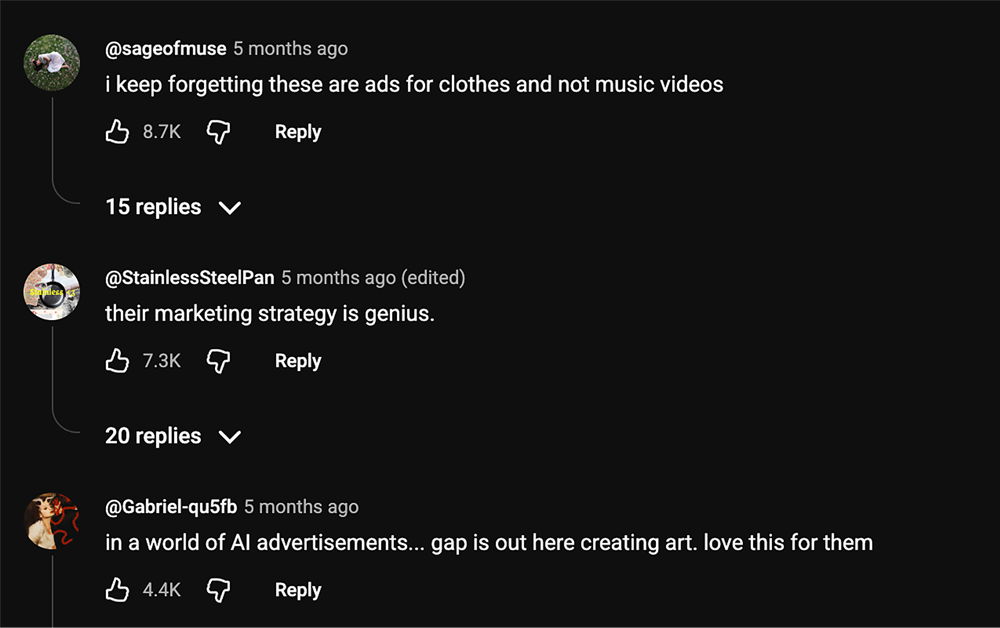
The brand builds entertainment around the product and releases it into the same stream as everything else we call content. If it catches on, the audience helps transform it into a temporary piece of monoculture: a reference that travels across different accounts, communities and conversations.
In the process, the advertisement becomes harder to distinguish from the culture surrounding it.
Gap calls it “fashion as entertainment.” I call it an uno reverse because now -
The Audience Has a Job
Each new post gives someone else a way into the campaign.
It offers the audience a play pattern: an idea simple enough to recognize, repeat and make their own. People can see where they fit inside it, and that’s culture + storytelling.
The act of participation changes the emotional temperature. The campaign matters because the audience has placed a little of itself inside it.
And so the advertisement is supercharged. The product becomes connected to the pleasure of joining in, and the brand begins to occupy the same relational space as the creators people already follow.
The audience takes the baton, and suddenly the campaign has no finish line.
Months later, the song can bring back the ad along with the feeling of having participated in it. The campaign keeps traveling because people have made it part of their own experience. And if you really want to participate in it, you can purchase the hoodie for $50.
The Feed Becomes the Studio
Gap appears to understand how significant this shift is.
Earlier this year, Gap formalized this ambition by creating a chief entertainment officer position. Pam Kaufman, who worked with us at Nickelodeon, landed the role. At Nick, she helped build franchises including PAW Patrol around this same understanding of participation.
We used play patterns to think about what made a show like PAW Patrol fun. A child could take home a pup or vehicle, recreate a rescue and continue telling the story on their own time. Purchasing a piece of the world gave them a way to enter it.
The new Gap campaigns apply a similar ethos to the feed. The music, movement and clothes give the audience a way to participate in the story. That participation creates an emotional relationship with the product and carries the campaign into people’s lives.
They call it “Fashiontainment.” The word is a little silly. The business behind it is serious.
Brands are building creative operations that can produce something capable of surviving in the feed. Every post appears beside comedy, music, news, gossip and someone’s personal life. The platform presents all of it as content and asks us to decide what deserves another second.
That arrangement turns the brand into a recurring performer. It needs a recognizable personality and enough creative stamina to keep appearing in public.
Someone has to keep that performance alive every day.
Godspeed to the social media manager.
So, What Ate What?
Advertisers now face a much bigger question than where to place an ad: How should a brand live in pop culture?
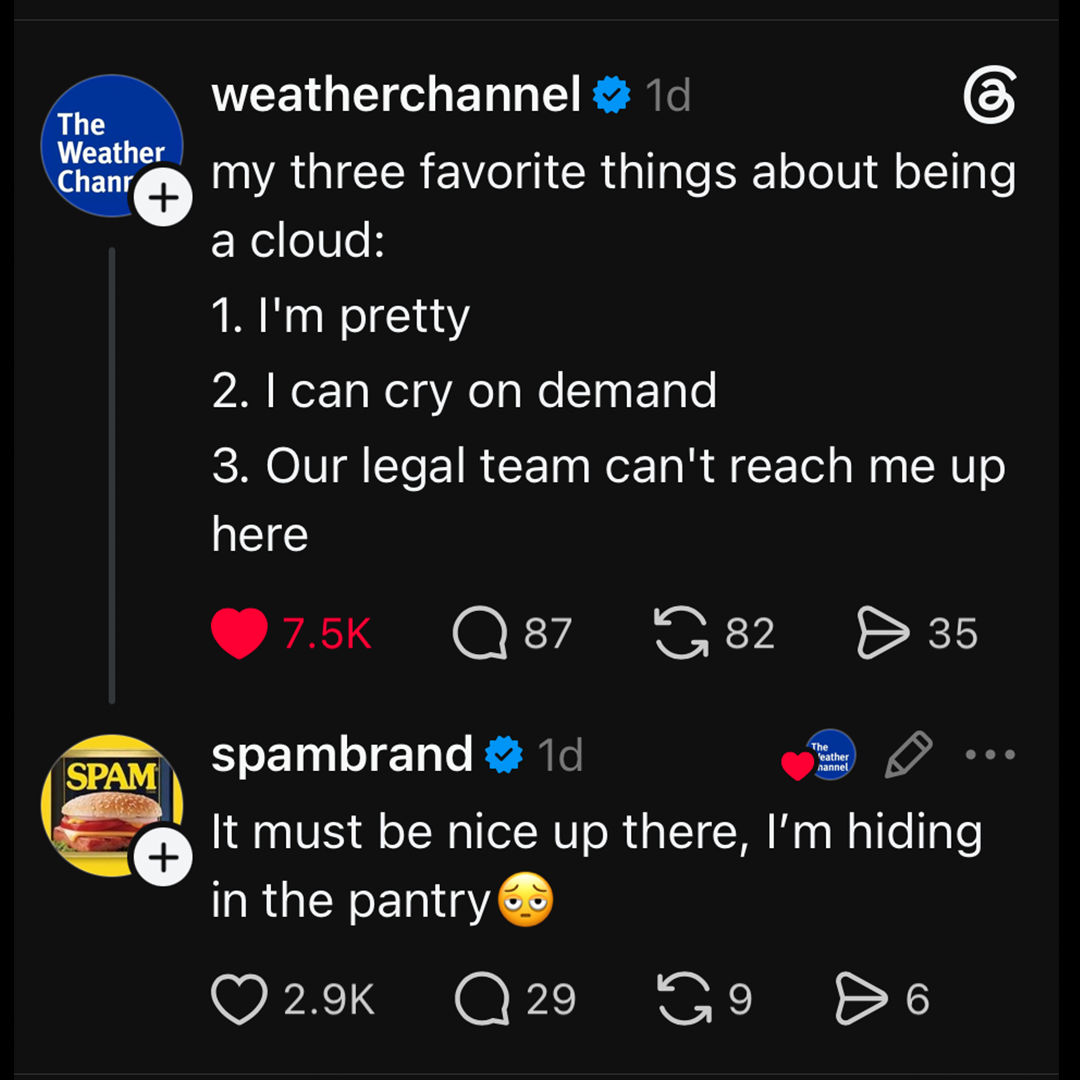
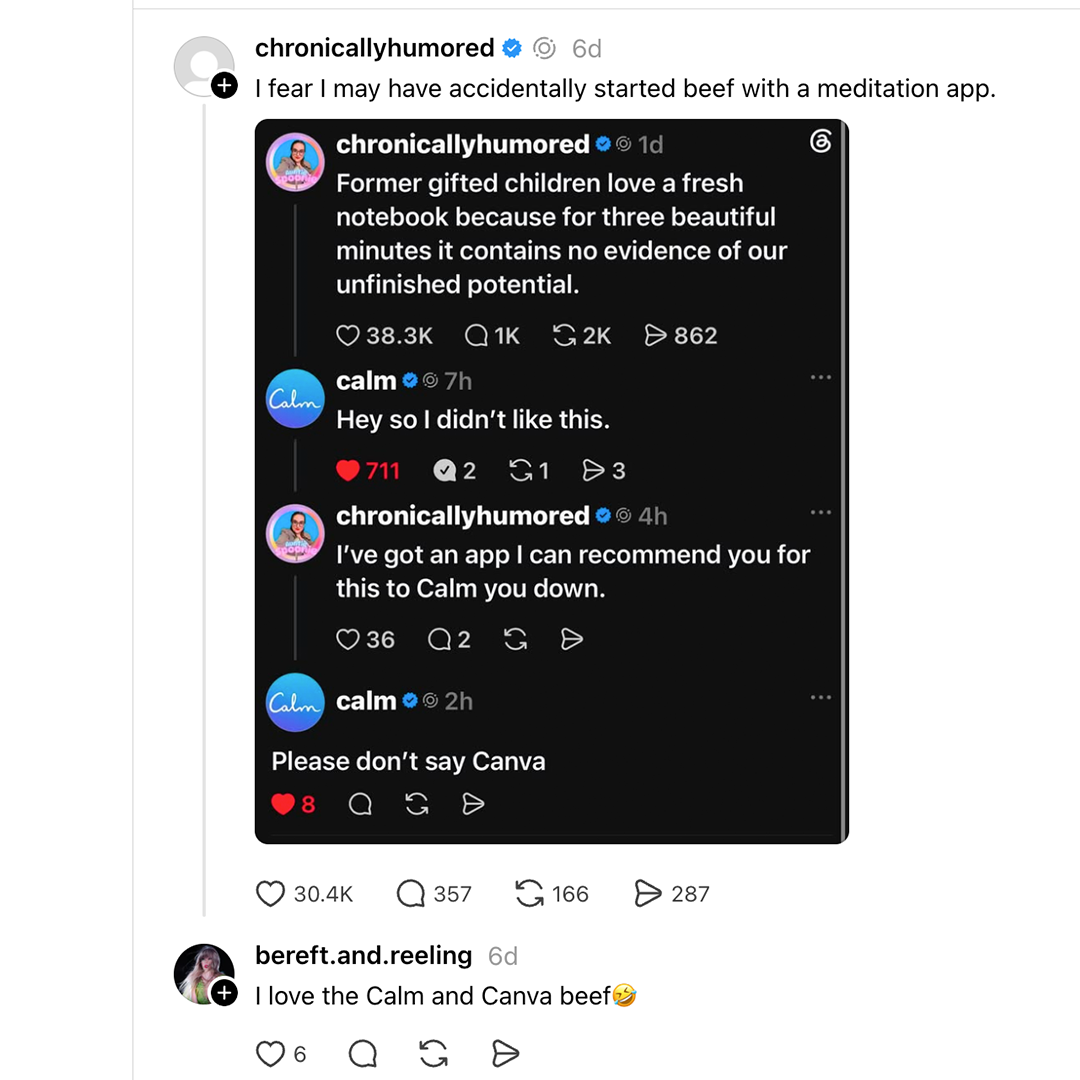
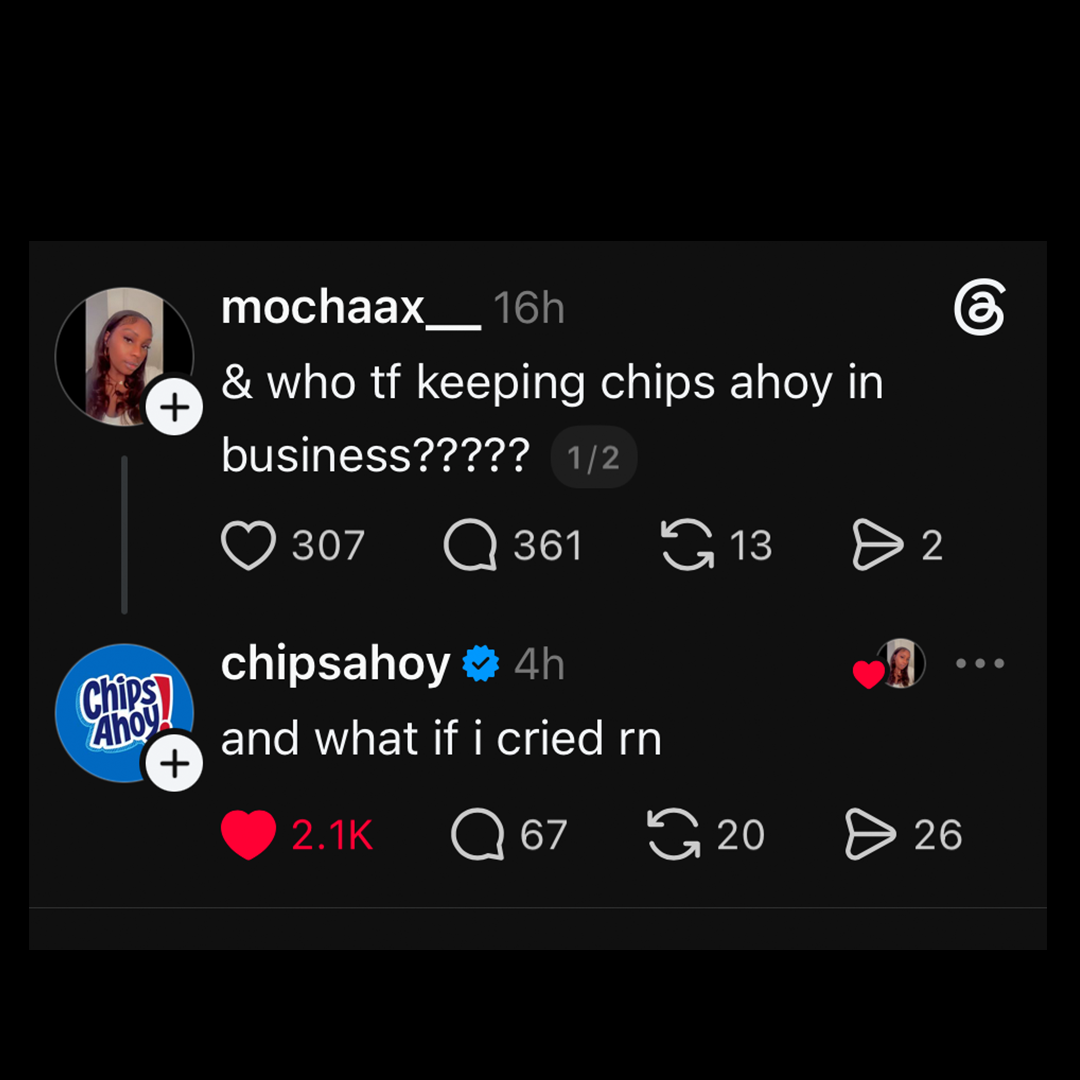
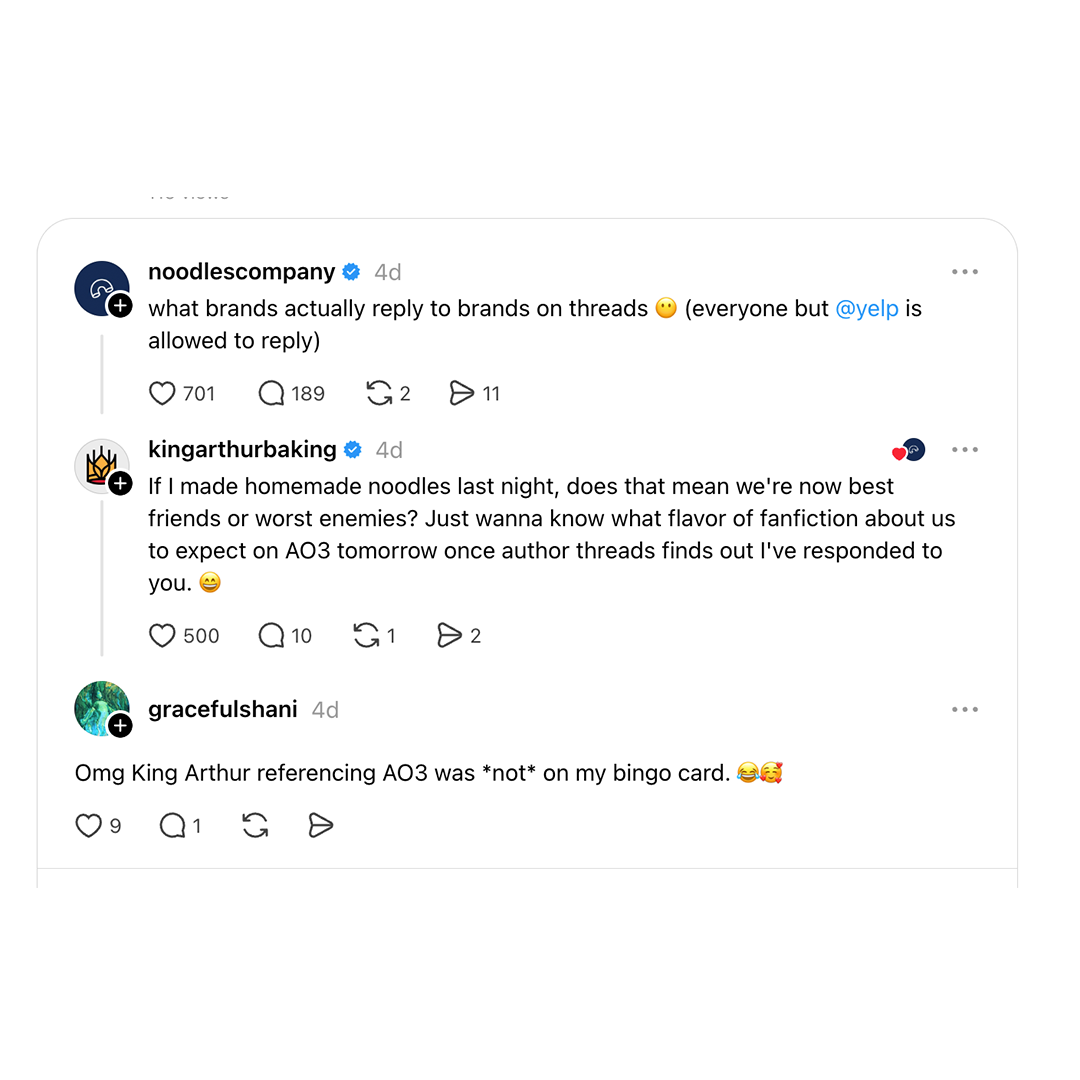
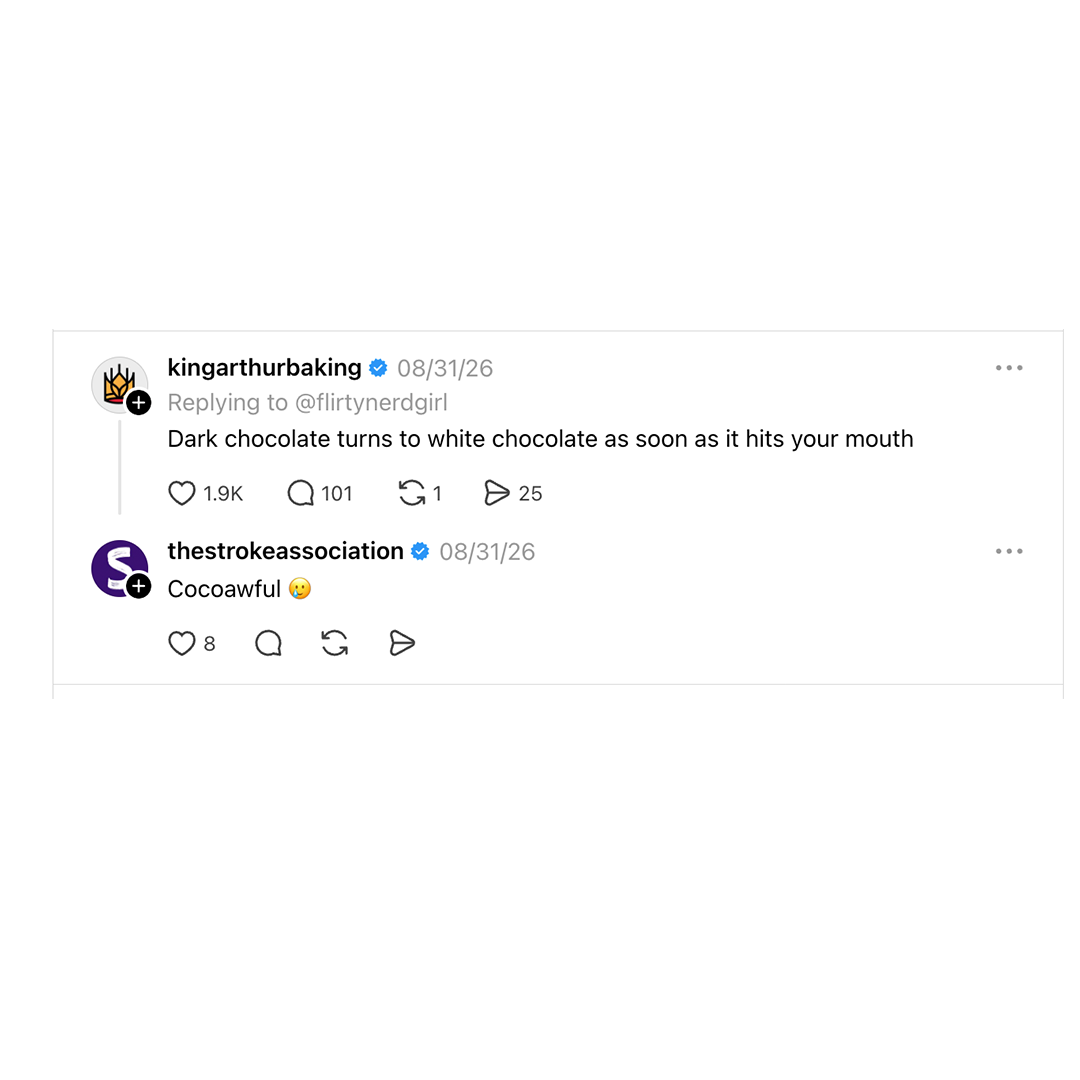
On Threads, brands are already experimenting with the answer. They appear in comment sections alongside our friends and favorite comedians, trying to land a joke before we scroll away.
The comment itself is the placement.
The glossy product shots and formal sales pitches are still here. Now if a brand wants anyone to actually see them, they’ve also got to tell us a story via a content creator who just so happens to have an Amazon affiliate link at the end. Oh, and they also need to show up beneath someone’s moronic post to joke with the rest of us.
The same corporate voice moves between selling and socializing, hoping to feel at home in both. That requires an understanding of culture deep enough to participate without sounding like a focus group pretending to be a person.
All of this asks something new of advertisers. They have to build a recognizable personality and perform it in public every day. The brand has to earn attention in the same environment as every other creator.
It asks something new of the audience, too. We can answer the brand, tease it, reward it or carry its joke into another conversation. Our response helps determine whether that voice becomes part of the culture or disappears into the feed.
This is how the line between advertising and content has evolved. The ad once occupied a designated break inside the entertainment. Now the brand can show up anywhere the socializing and storytelling is happening AND behave like one of the people making it.
So in the end, the ad break has eaten the show, cast us in it, and now the feed serves the whole thing back to us as culture.
Epilogue:
The Comments As Part of the Show
Let’s go a little deeper. We’ve all seen brands getting active in the comments. If brands are behaving like people while people are becoming brands, does the smooshening (or expansion) runs both ways?
We live in wild times.